

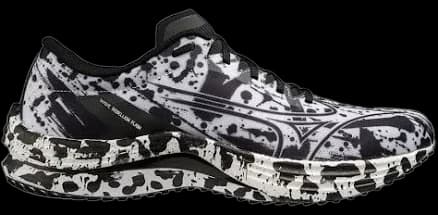
Lifespan: Mizuno Wave Rebellion Flash
~520 km~323 mi
Add the km they've run to start the count.Add the miles they've run to start the count.
See full data on the Wave Rebellion Flash
Buy, track or sell
No Wave Rebellion Flash listed right now.
Be first in line — we'll email you the moment a pair in your size lists.
About the shoe
The Mizuno Wave Rebellion Flash stands out as a lightweight, stable trainer that excels at tempo runs and faster workouts. Its responsive ride and secure fit make it a strong choice for runners seeking a versatile shoe for both speedwork and longer efforts, though its outsole may wear quickly with heavy use.
The G3 outsole is consistently praised for its grip and longevity, with minimal wear reported after dozens of miles. The firm midsole and robust build suggest above-average durability for a lightweight trainer.
Full specs, fit notes, and reviews on the Mizuno Wave Rebellion Flash wiki page.
Specs
230 g · 8 mm drop
Norma rating
8.2/10
The Mizuno Wave Rebellion Flash 2 is widely regarded as a top-tier 'super trainer' optimized for uptempo and tempo runs, thanks to its lightweight build (approx. 8.4–8.7 oz), energetic yet stable ENERZY LITE+ midsole, and responsive ride. Experts consistently highlight its forward-rolling geometry, springy toe-off, and firm but protective cushioning, making it ideal for threshold and speedwork sessions. Its cushioning and shock absorption (heel SA 148, forefoot SA 117) are above average, supporting longer efforts and heavier runners, but the energy return (54.9%) is slightly below the best racing foams, making it less optimal for elite-level racing or maximal recovery comfort. For daily training, it is suitable for runners who prefer a firmer, more responsive ride, but some may find it too aggressive or stiff for easy/recovery days. The shoe is not designed for trail use, lacking the traction and protection needed for technical terrain. While it can handle long runs due to its cushioning, the firm ride and aggressive geometry may fatigue some runners over marathon distances, though others appreciate its stability and protection for extended road efforts. For racing, it is a strong choice for 5K–half marathon, especially for those who prefer a plated trainer over a full carbon racer, but it is not the absolute fastest option for marathon PRs. Recovery runs are possible but not ideal due to the shoe's stiffness and lower plushness compared to dedicated recovery models.
- Lightweight build enables quick turnover and reduces fatigue during faster sessions
- Stable platform and secure heel lock provide confidence for tempo runs and intervals
- Dual-foam midsole delivers a balance of cushioning and responsiveness, suitable for both long runs and uptempo efforts
- Grippy G3 outsole offers reliable traction on a variety of surfaces, even in wet conditions
- Spacious toebox accommodates natural toe splay, enhancing comfort on longer runs
- Outsole durability is below average, making it less ideal for high-mileage daily training
- Energy return lags behind top competitors, limiting its appeal for runners seeking maximum propulsion
Best for and fit
Tempo
Ideal for Best suited for intermediate to advanced runners who prioritize speed and stability in their training. Ideal for those who incorporate tempo runs, intervals, and long runs at a brisk pace, and who want a shoe that bridges the gap between daily trainers and race-day models.
The engineered mesh upper is breathable and adapts well to foot shape, while overlays and internal straps enhance lockdown. The shoe’s geometry encourages a mid-to-forefoot strike and efficient transitions. Not recommended for runners needing wide sizing or maximal toe splay, but offers a secure, performance fit for tempo runs and racing.
Sizing: Generally true to size; most reviewers and user feedback indicate standard sizing is appropriate, with no consistent recommendations to size up or down compared to other Mizuno models or plated trainers.
Against its category
520 km average323 mi average
Speedwork shoes in NORMA's database last between 250155 and 800 km497 mi across 111 models. At 520 km323 mi, the Mizuno Wave Rebellion Flash sits in the lower half of that range.
Other versions and similar shoes
- Wave Rebellion Flash~520 km · 323 mi
- Wave Rebellion Flash 2~520 km · 323 mi
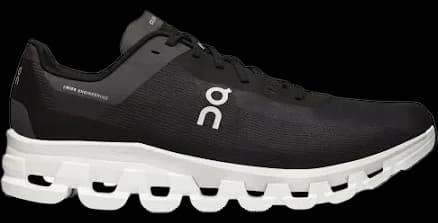
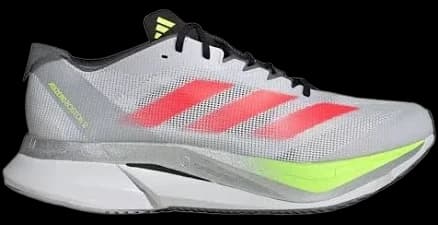
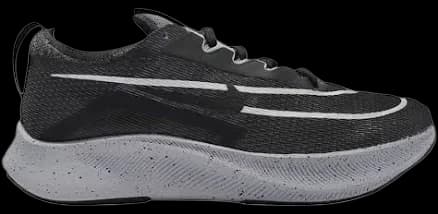
Questions and guides
How many kilometres does the Mizuno Wave Rebellion Flash last?
The Mizuno Wave Rebellion Flash lasts about 520 km (323 miles), based on hand-researched wear data for this model. Your own mileage shifts with body weight, running surface, and how you use the shoe.
How many miles does the Mizuno Wave Rebellion Flash last?
About 323 miles (520 km), based on hand-researched wear data for this model.
When should I replace the Mizuno Wave Rebellion Flash?
Start checking for wear around 312 km (60% of its lifespan). By 416 km the foam and outsole are usually noticeably degraded, and most runners retire the shoe between there and 520 km.
How does the Mizuno Wave Rebellion Flash compare to other speedwork shoes?
Speedwork shoes in NORMA's database range from 250 to 800 km across 111 models. At 520 km, the Mizuno Wave Rebellion Flash sits in the lower half of that range.
Is a used Mizuno Wave Rebellion Flash worth buying?
Often, yes. A pair with under 60% wear (roughly 312 km) still has real training life left. NORMA lists second-rotation running shoes, and sellers can add the miles they logged, so you can see how much life is left.