

Lifespan: Hoka Transport
~560 km~348 mi
Add the km they've run to start the count.Add the miles they've run to start the count.
See full data on the Transport
Buy, track or sell
No Transport listed right now.
Be first in line — we'll email you the moment a pair in your size lists.
About the shoe
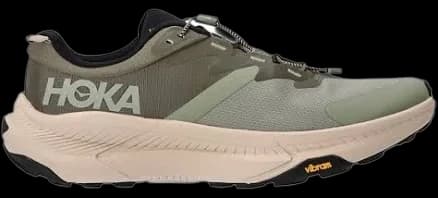
The Hoka Transport is designed for runners and walkers who prioritize comfort, durability, and versatility in a daily trainer. Its plush cushioning and stable platform excel during commutes, walks, and easy runs, while the quick-toggle lacing and weather-resistant build make it a practical choice for unpredictable conditions. Though heavier than typical running shoes, its all-day comfort and eco-friendly construction set it apart for those seeking a reliable, do-it-all option.
The shoe is consistently praised for its robust build, featuring a Cordura upper and Vibram EcoStep outsole, both designed for longevity. Multiple sources note the shoe holds up well after months of daily use, with minimal wear reported.
Full specs, fit notes, and reviews on the Hoka Transport wiki page.
Specs
298 g · 5 mm drop
Norma rating
8.0/10
The Hoka Transport is primarily designed as a commuter and lifestyle shoe, excelling in daily walking, standing, and general use. Expert reviews consistently highlight its comfort, durability, and moderate cushioning, making it suitable for daily training at easy paces and recovery runs, especially for those who prioritize comfort and stability over speed. However, its relatively heavy weight (men's 11.2oz), firmer ride, and average responsiveness limit its suitability for tempo runs, racing, and long runs, where lighter and more responsive shoes are preferred. The outsole traction is adequate for roads and sidewalks but not optimized for trails or technical terrain. User feedback and expert consensus agree that while the Transport can handle short, easy runs in a pinch, it is not intended for performance running or off-road use. Its APMA Seal of Acceptance and positive reviews for all-day comfort further support its use for recovery and daily wear, but not for competitive or specialized running scenarios.
- Exceptional all-day comfort makes it ideal for long commutes, travel, or extended periods on your feet
- Quick-toggle lacing system allows for fast, secure adjustments and easy on-off convenience
- Durable, water-resistant Cordura upper and Vibram EcoStep outsole provide reliable traction and weather protection
- Sustainable construction with recycled materials and sugarcane-based EVA midsole appeals to eco-conscious runners
- Heavier than most running shoes, which may be noticeable during longer or faster runs
- Breathability is limited, making the shoe less suitable for warm weather or high-intensity efforts
Best for and fit
Daily training
Ideal for Best suited for beginner to intermediate runners, commuters, and walkers who value comfort, stability, and convenience over speed. Ideal for those with busy lifestyles, urban environments, or anyone seeking a versatile shoe for walking, light running, and daily activities.
The Hoka Transport is designed as a crossover between lifestyle and light hiking, offering a plush yet stable ride. The cushioning is softer than most walking shoes but firmer than Hoka's plushest running models, striking a balance for all-day comfort. The shoe is not intended for high-performance running but excels in daily wear, commuting, and long periods on your feet. Some users note the elastic laces can contribute to minor heel slippage, but switching to traditional laces improves lockdown. The upper is durable and protective, with a focus on sustainability. The fit is accommodating for most foot shapes, but those with very wide feet may want to try before buying.
Sizing: Generally true to size; most testers and users report no need to size up or down. Some with very wide feet may find the fit slightly snug, but standard width is accommodating for most. Comparable to Hoka Clifton sizing.
Against its category
600 km average373 mi average
Daily Trainer shoes in NORMA's database last between 320199 and 800 km497 mi across 653 models. At 560 km348 mi, the Hoka Transport sits in the upper half of that range.
Other versions and similar shoes

Questions and guides
How many kilometres does the Hoka Transport last?
The Hoka Transport lasts about 560 km (348 miles), based on hand-researched wear data for this model. Your own mileage shifts with body weight, running surface, and how you use the shoe.
How many miles does the Hoka Transport last?
About 348 miles (560 km), based on hand-researched wear data for this model.
When should I replace the Hoka Transport?
Start checking for wear around 336 km (60% of its lifespan). By 448 km the foam and outsole are usually noticeably degraded, and most runners retire the shoe between there and 560 km.
How does the Hoka Transport compare to other daily trainer shoes?
Daily Trainer shoes in NORMA's database range from 320 to 800 km across 653 models. At 560 km, the Hoka Transport sits in the upper half of that range.
Is a used Hoka Transport worth buying?
Often, yes. A pair with under 60% wear (roughly 336 km) still has real training life left. NORMA lists second-rotation running shoes, and sellers can add the miles they logged, so you can see how much life is left.